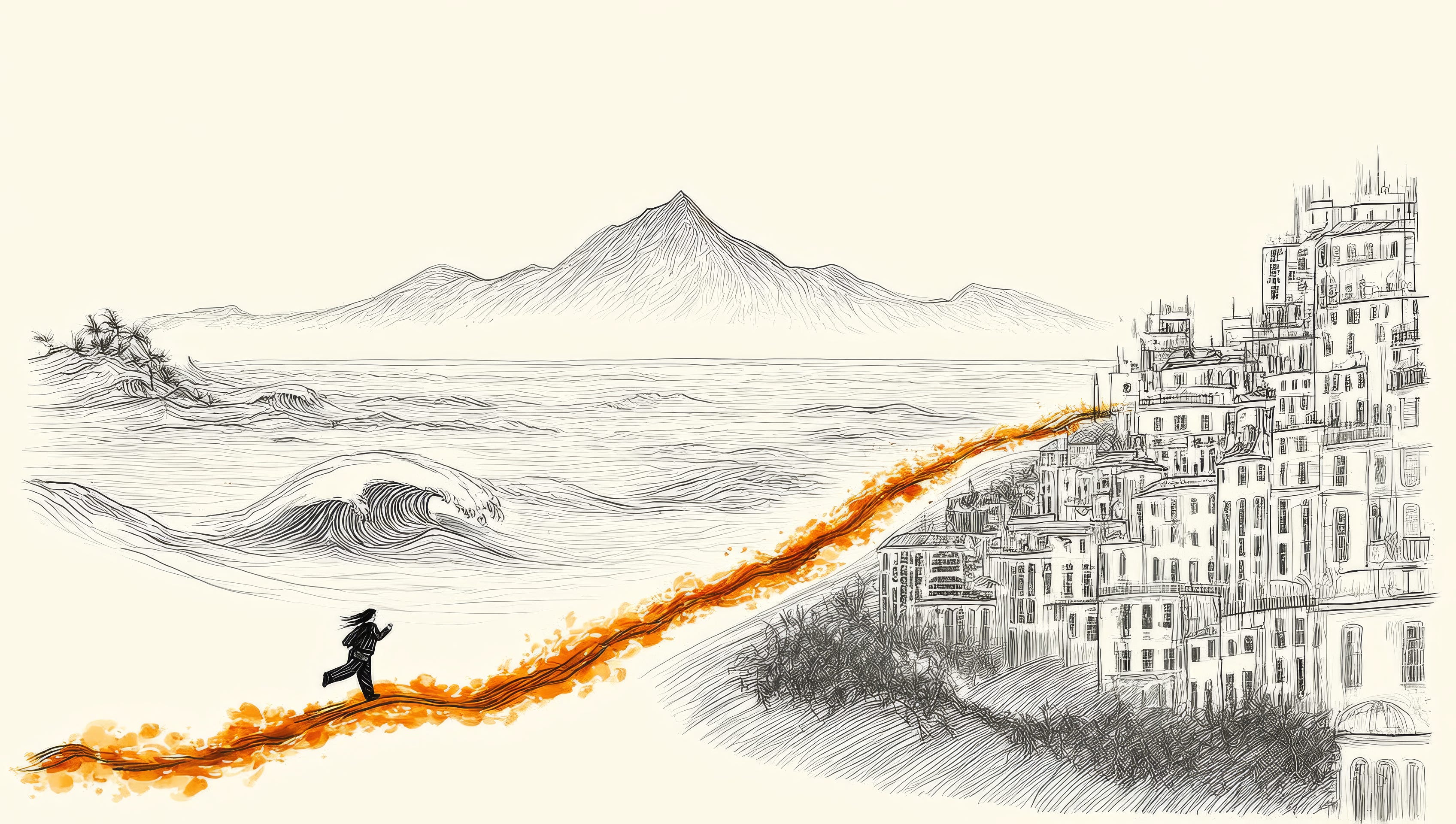
Wired For Variance
Over 50 house moves in five years sounds like chaos. For me, it's not. It's intentional.

People think I’m running from something.
I’m not.
My wife and I have lived in 50+ places in the last five years. Coast to coast. Mountains. Cities. Ocean. Every 6–8 weeks, we move. Fully nomadic.
But I’m not restless. I’m not avoiding anything.
I’m wired for variance.
Not everyone is. I didn’t even realize I was for a long time.
Same desk for six months and the thinking goes flat. Same view, same coffee shop, same weekend rhythm, and the work starts recycling itself. I notice it immediately: ideas narrow, solutions get predictable, the ceiling drops.
It took me 15 years to realize this wasn’t a flaw. It was how I’m built.
And once I stopped fighting it, the work got better.
Creative expectations in 2026 are brutal.
AI generates competent work in seconds. Clients expect more for less. Timelines shrink. Critique sharpens. “Good enough” doesn’t exist anymore.
The instinct is always the same: Work harder. Refine the process. Upgrade the tools.
But creativity isn’t an output problem.
It’s an input problem.
Ernest Hemingway said it: To be an interesting writer, you have to live an interesting life.
For me, that means curiosity — about new places, new people, new environments.
New city, new inputs, every 6–8 weeks. Not chaos. Just not Groundhog Day.
And that variance changes everything.
New light, new sounds, new rhythms — the brain can’t autopilot. It has to notice.
And yes — a busy, buzzing creative studio absolutely counts as variance. The energy of a great team, the collision of ideas, the texture of live collaboration — that’s high-stimulus input. Some of my best thinking happens in that environment. This isn’t about rejecting studios or teams. It’s about recognizing that input variety — whether it’s geographic, social, or environmental — is what keeps the creative engine running.
Lake Tahoe doesn’t produce the same ideas as Hollywood. Mountain pace vs city pace. Same brief, different answer — not because the problem changed, but because the input did.
If your inputs haven’t changed in a year, neither has your thinking.
Your version won’t look like mine.
You probably won’t move every 6–8 weeks. You might not need to.
But I’ve learned you need something that forces variance into your input stream. Because without it, inputs go stale — and stale inputs produce stale work, no matter how hard you push.
I’m not saying this because I figured it out.
It took a pandemic lockdown in Brooklyn to realize something simple: Flexibility and movement weren’t luxuries. They were fuel.
That was the pivot — away from the comfort of consistency, toward designing life around what actually makes the work better.
We’ve been refining it ever since. And the work got better.
Fresh inputs. Fresh work.
It’s that simple. And that hard.
—
What’s your variance?